

If you have ever opened Matthew, then skipped to John, then circled back to Luke and felt slightly disoriented, you are not alone.
Many believers want to grow in understanding the Gospels but feel unsure how the four accounts fit together. The stories overlap. Certain miracles appear in more than one book. Some details are included in one Gospel and not in another.
It can leave you wondering whether you are reading correctly.
Learning how to study the Gospels does not require complicated charts or advanced theological training. It requires understanding what makes each Gospel unique and choosing a clear, steady rhythm that keeps you anchored in the text.
In this guide, you will learn how to study the Gospels in order, how to build a simple gospel study guide for yourself, and how to read the Bible for understanding without creating confusion.
What Makes the Gospels Unique and Why It Matters
Before deciding how to study the Gospels, it helps to understand what they are.
The Gospels are not modern biographies. They are theological narratives. Each writer presents the life, teaching, death, and resurrection of Jesus with a specific audience and purpose in mind.
Matthew writes with a strong Jewish audience in view. He frequently highlights Old Testament fulfillment and the language of the kingdom of heaven.
Mark writes with urgency and movement. His Gospel emphasizes action and authority.
Luke writes carefully and with historical structure. He often focuses on the marginalized, prayer, and the work of the Spirit.
John writes with depth and reflection. He centers on belief and the identity of Christ as the Son of God.
Understanding the Gospels begins with recognizing that each writer shapes the story faithfully, yet purposefully.
If you would like a helpful visual overview of each book before you begin, BibleProject offers clear summaries at https://bibleproject.com/.

How to Study the Gospels in Order: Choosing the Right Path
When asking how to study the Gospels in order, you generally have two healthy options.
Option 1: Canonical Order
Read them in the order they appear in your Bible. Matthew, Mark, Luke, John.
This approach allows you to experience the Gospels as they have been historically arranged in Scripture. It is simple and removes unnecessary planning.
For many readers, this is the most practical way to begin learning how to study the Gospels.
Option 2: Approximate Chronological Study
Some prefer to read the Gospels in approximate chronological order, comparing parallel passages side by side.
This can deepen your understanding of repeated events, but it can also become complicated quickly if you are not careful.
If you are new to a gospel study guide approach, canonical order often provides more clarity. Chronological study is helpful later when you want deeper comparison.
Clarity first. Complexity later.
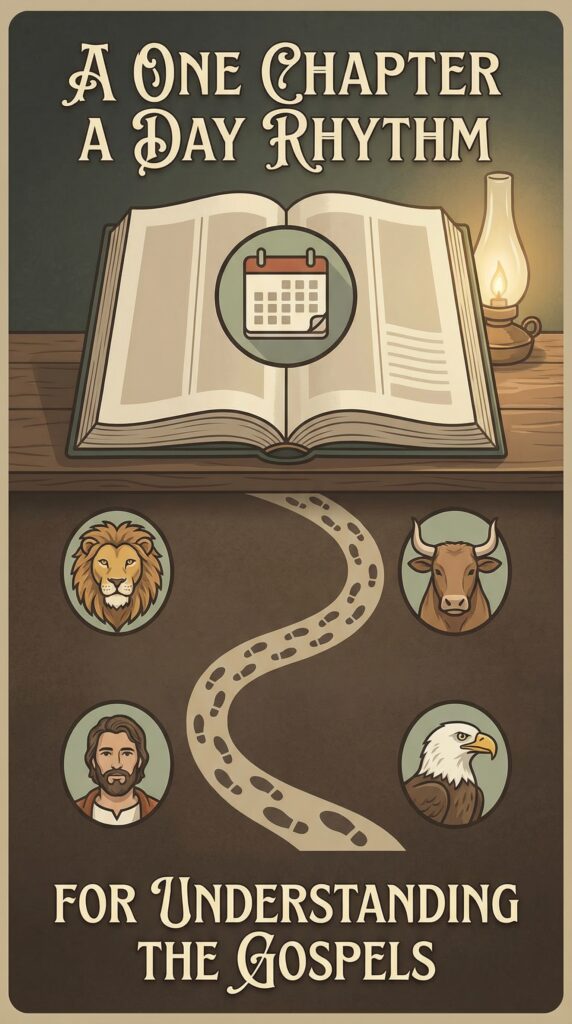
A One Chapter a Day Rhythm for Understanding the Gospels
If your goal is understanding the Gospels, choose one book and read one chapter a day.
A one chapter a day rhythm supports how to read the Bible for understanding because you see complete scenes instead of isolated verses.
As you read each chapter:
- Notice who is speaking
- Identify the audience
- Observe the setting
- Watch for repeated themes
- Pay attention to emotional tone
If you would like occasional background insight while reading, a trusted Bible commentary such as https://enduringword.com/ can provide helpful clarification without overwhelming you.
Consistency builds familiarity. Familiarity builds confidence.
How to Study the Gospels Without Confusion: What to Watch For
When learning how to study the Gospels without confusion, focus on four guiding lenses.
1. Audience
Ask who the writer seems to address.
Are there frequent references to Old Testament prophecy? That often signals a Jewish audience.
Are cultural customs explained in more detail? That may indicate a broader, Gentile audience.
2. Setting
Notice where events take place.
Is Jesus in Galilee, Jerusalem, or traveling between towns? Geography often shapes tension and meaning.
3. Repeated Themes
Each Gospel emphasizes certain themes.
Matthew highlights fulfillment and kingdom language.
Mark emphasizes authority and immediacy.
Luke highlights compassion and inclusion.
John emphasizes belief and identity.
Repeated themes guide interpretation and keep you from flattening the message.
4. Unique Details
When accounts differ slightly, ask what the writer is emphasizing.
Differences do not signal contradiction. They often reveal perspective and purpose.
Understanding the Gospels means noticing both harmony and emphasis.
Expanded Bible Study Prompts for Each Gospel Chapter
Use these Bible study prompts as you move through each chapter. Write two to four lines for each question that stands out.
Identity Prompts
- What does this chapter reveal about who Jesus is?
- What titles or descriptions are used for Him?
- How does this chapter deepen my understanding of His authority or compassion?
Response Prompts
- How do people respond to Jesus in this passage?
- Who believes, who questions, and who resists?
- What does that reveal about the human heart?
Teaching Prompts
- What is the central teaching or miracle in this chapter?
- Is there a command to obey or a truth to trust?
- What repeated words or phrases stand out?
Personal Reflection Prompts
- What invites me to believe more deeply?
- Where do I see myself in this chapter?
- What is one clear takeaway for today?
These Bible study prompts create a steady gospel study guide rhythm without overwhelming you with comparison charts.
Start Here
If you want a simple starting plan for how to study the Gospels:
- Begin with the Gospel of John
- Read one chapter per day
- Use the prompts above
- Keep all notes in one notebook
- Continue for 21 days before evaluating your progress
Understanding the Gospels grows steadily when you stay in one place long enough to see patterns form.
Keep Your Study Rooted
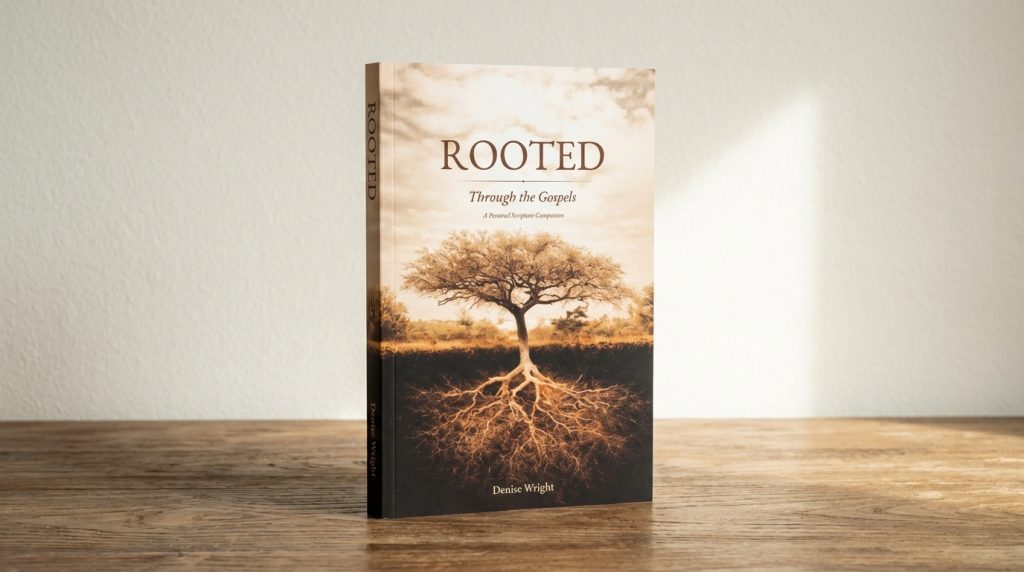
If you want a ready companion as you move through the life of Christ, you can explore the ROOTED: Through the Gospels study.
To learn more about the broader rhythm behind this approach, visit the ROOTED method page.
How to study the Gospels does not have to feel confusing.
One Gospel.
One chapter.
One steady return each day.
If you want a ready companion, see ROOTED: Through the Gospels.